

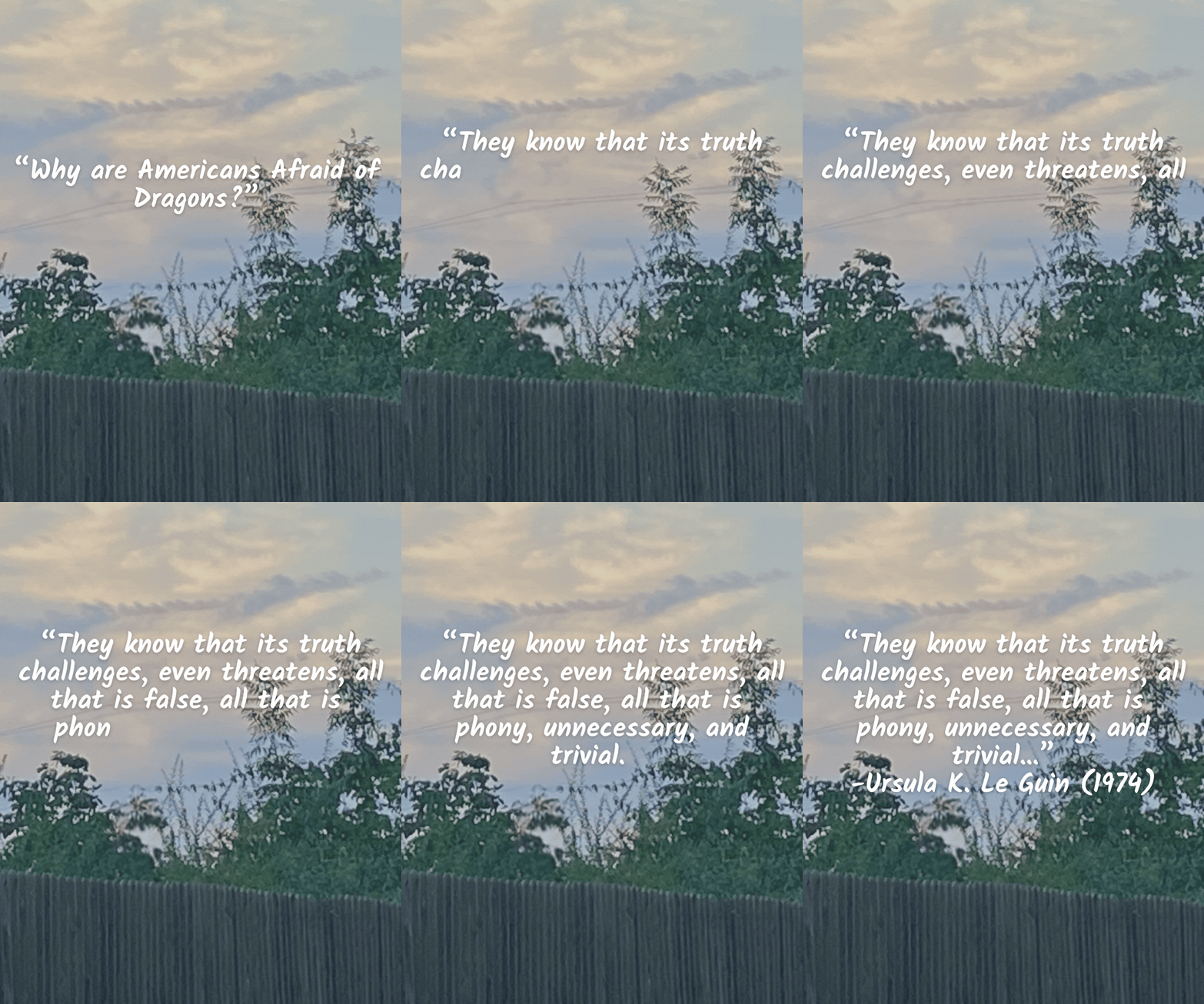
What do dragons mean to you?
In the 1974 essay, “Why Are Americans Afraid of Dragons?”
fantasy and science fiction author Ursula K. Le Guin
speaks of dragons as a symbol of the human capacity for imagination.
Le Guin explores a particular cultural stance of the time
that saw the imagination as silly and childlike,
something ultimately meant to be outgrown
in favor of more adult and worthwhile pursuits.
In our time, it seems there has been a cultural shift
toward embracing fantasy and worlds full of magic and superpowers.
We see this with the new Spider-Man movie breaking box office records,
TV shows House of the Dragon and Game of Thrones attracting broad viewership,
and fantasy as one of the top-selling literary genres across the globe.
I’ve found fantasy and imagination to be worthwhile
simply for escapism and enjoyment,
and that is valid and powerful in its own way.
And then there’s also the subversive potential of fantasy and imagination
that Le Guin seems to focus on in this essay
—their ability to disrupt, challenge, and expose the status quo
while portraying alternatives.
Perhaps dragons have something real to show us
about our world and who and how we are.
I’ve noticed that we tend to seek mastery
over the dragons of our imagination,
preferring them in a presentation that
is somehow tamed and domesticated.
As a writer, I’m curious about and want to see more of
the dragons who stay wild, unclaimed, and unmastered.
Yes, wild dragons can be dangerous,
but is there something to be said
for learning to respect and coexist
with something or someone that
has its own sovereignty and power
in a way that we can’t fully know or control?
After all, isn’t consent about meeting
a wild and sovereign being on its own terms,
therefore maintaining integrity with
the values of justice, care, and freedom
and opening the door
to the potential fruits of genuine relationship?
Or are we still afraid of wild dragons?
What do dragons mean to you?